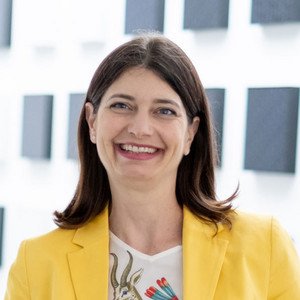
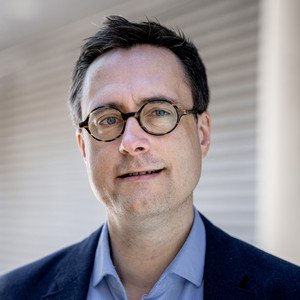
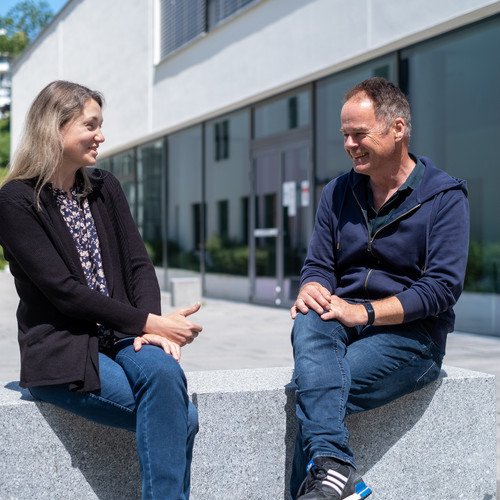
Management professor Alina Kasinska, who fled from the heavily bombarded city of Mykolaiv, Ukraine, has made natural reserves a main research interest. Thanks to funding from the VolkswagenStiftung, together with her doctoral supervisor, Olha Komelina, she will study the Russian onslaught's impacts upon Ukraine's national parks in research funded by the VolkswagenStiftung. The Ukrainian guest professors are supported by an interdisciplinary team of scholars at the University of Passau.
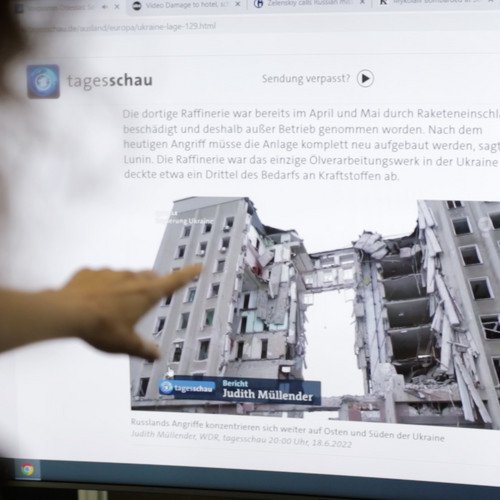
The hole in the building of the regional administration in the city of Mykolaiv is symbolic of the heavy fighting currently taking place at the front lines in the south of the country. Located near the Black Sea coast, Mykolaiv is considered an outpost of Odessa. "The situation there is getting worse every day," Professor Alina Kasinska, an expert in management and sustainability, says in the video. Before fleeing to Passau, she worked at the Pylyp Orlyk International Classical University in Mykolaiv. "Since the start of the war, hardly a day has gone by without a bombing or missile attack."
The fighting affects people as well as the natural environment. 44 per cent of the national park areas are occupied by Russian troops, according to Professor Kasinska. Explosions and bombardments are a regular occurence, and the coastal areas are mined. In her home region of Mykolaiv alone, there are more than 140 nature reserves, including seven national parks.
Alina Kasinska has made organisational aspects of protected natural areas the focus of her research ever since she wrote her doctoral thesis. Together with her doctoral supervisor, Olha Komelina, who meanwhile has also fled to Passau, she is forging ahead with a new project at the University of Passau entitled “Organizational sense-making, innovation, and adaptation in response to extreme exogenous jolts – The responses of natural parks in Ukraine to the Russian onslaught in 2022”. Using the example of "Biloberezhia Sviatoslava" National Park near the city of Ochakiv on the shores of the Black Sea, the Ukrainian guest researchers are exploring how nature reserves react to extreme events such as wars and other crisis. This research is funded through a scholarship from the German Volkswagen Foundation.
The two researchers are part of an interdisciplinary team that also involves professors Andreas König (Management), Carolin Häussler (Innovation) and Christine Schmitt (Human-Environment Research, Physical Geography) from the University of Passau and management professor Jonathan Bundy from Arizona State University.
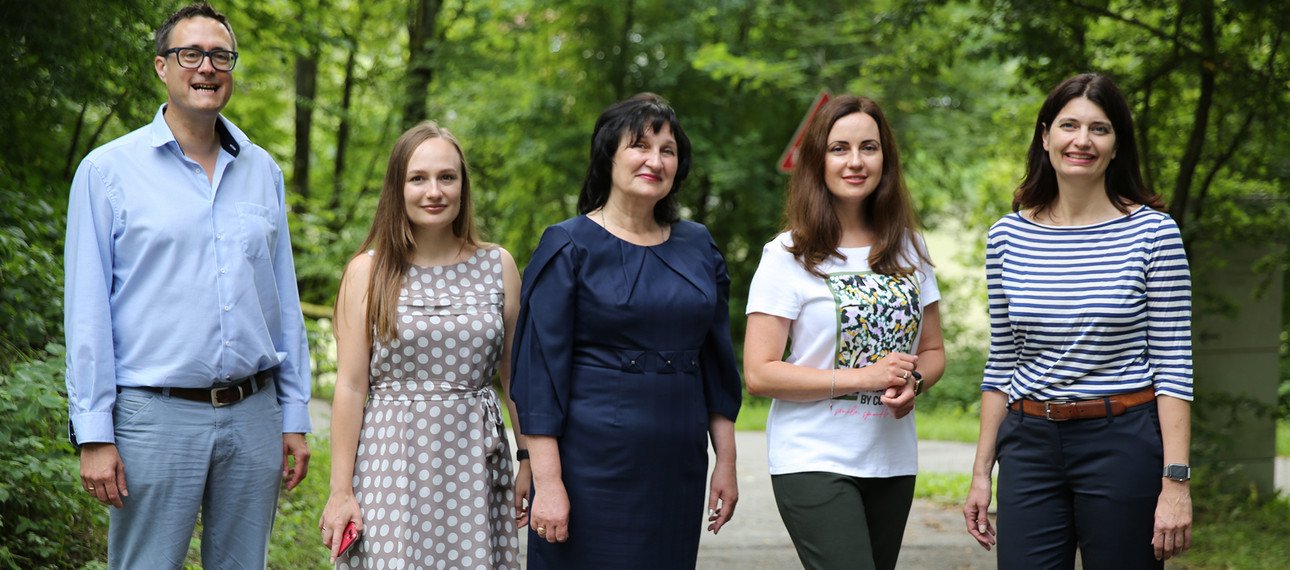
"In our conversations, we found that Professors Kasinska’s and Komelina’s interests in management and development aligned well with our research interests", says Professor König. Thus, crisis responses, flexibility, innovation, and how they connect with sustainability and biodiversity issues are at the heart of the research done at the University of Passau.
Professor Carolin Haeussler’s research is concerned with crisis management in organisations, and she advises the German federal government on matters related to this research. In times like these, strategic plans and procedures can go out the window overnight, she says. “The companies and organisations that do best tend to be the ones who can react swiftly and are quick to adapt.”
The impact of war on biodiversity is both direct and indirect, says geography professor Christine Schmitt. "One example of direct impact is a military action in a national park, which leads to the destruction of woods, vegetation and the killing of animals", whereas an indirect impact is seen, for instance, in countries where people are heavily reliant on natural resources. Thus far, Professor Schmitt's research has been centred on the consequences of war in Africa, now she is contributing her findings to the project of the Ukrainian guest researchers.
Professors Kasinska and Komelina are among the Ukrainian researchers who have been given the opportunity to continue their research at the University of Passau with the help of scholarships from the Volkswagen Foundation. We are introducing them in a series. Part I: Dr Hannah Sarmina and digital journalism in Germany and Ukraine.