Professor Carolin Häussler sees a need to catch up in terms of innovation and the introduction of developed products and services to the market. The Passau economist is a member of the Expert Commission for Research and Innovation, which has handed over its annual report to Chancellor Angela Merkel.
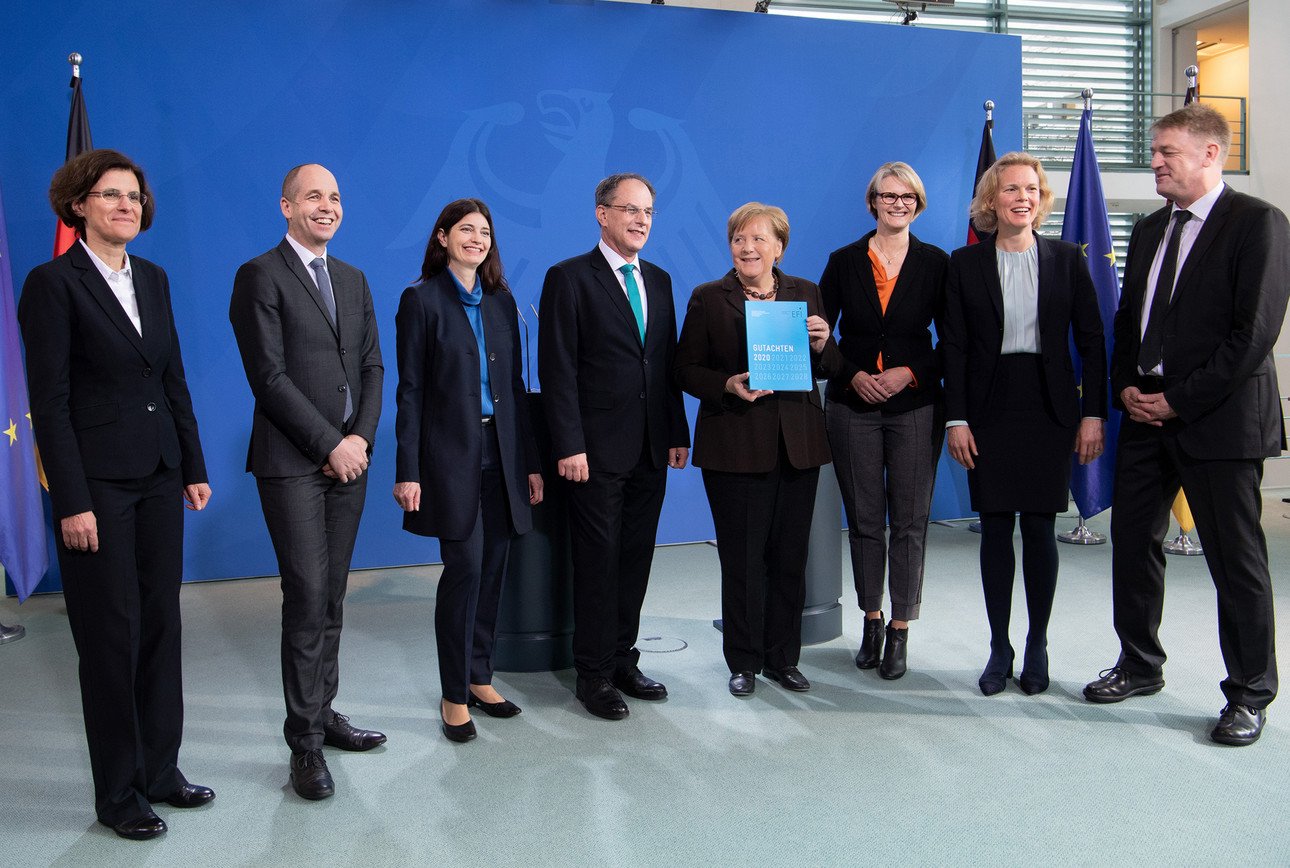
The new annual report of the Expert Commission on Research and Innovation (EFI), which was presented to the Federal Chancellor in Berlin to mark the occasion of the 30th anniversary of German reunification, examines the current innovation performance of eastern Germany and its development over the past few years – also in comparison to western Germany. In addition to East Germany as a location for innovation, the Commission also examined the topics of cyber security and knowledge and technology transfer with China and formulated recommendations for the Federal Government.
Innovations are regarded as important drivers of overall economic productivity and thus of the development of income and prosperity in an economy. "Studies show that East Germany has been able to significantly reduce the productivity gap with West Germany since reunification: In 1991, productivity in East Germany was around 45 percent of the level in West Germany, and in 2018 it will be around 83 percent", says Professor Uwe Cantner from the University of Jena, delighted with the trend. He is also chairman of the expert commission. At the same time, however, he notes that this alignment has slowed down considerably. This is due to the many structural differences between East and West Germany, which are still present, and which also affect the innovation of companies.
In order to take account of the differences in economic structure between eastern and western Germany and thus arrive at a meaningful comparison, only enterprises from eastern and western Germany were compared with each other that exhibited similar structural characteristics. Professor Cantner states: "If only structurally similar companies are compared with each other, it becomes clear that the innovative activity of East German companies has largely matched that of West German companies in recent years.”
As the comparison shows, East German and West German companies are almost on a par when it comes to key innovation indicators. "For example, there are hardly any differences between East and West German companies in terms of innovative intensity and the share of turnover generated by product innovations", says Professor Carolin Häussler from the University of Passau and member of the expert commission. "On the other hand, there is still a clear need for East German companies to catch up when it comes to launching innovative activities and introducing innovations to the market", she continues.
Furthermore, the analysis shows that East German companies cooperate more often than West German companies in their innovation projects. However, their cooperation is more often regional and less international.
This results in the following recommendations of the EFI:
Further topics of the report include cyber security and the exchange of knowledge and technology with China.
In its annual report, the Commission of Experts on Research and Innovation (EFI) also dealt intensively with the topic of cyber security and the impact of cyber risks on innovation activities as well as the exchange of knowledge and technology between Germany and China. The Commission also made recommendations for the Federal Government's high-tech strategy and knowledge policy.
The Expert Commission for Research and Innovation (EFI), based in Berlin, has been providing scientific policy advice to the Federal Government since 2008 and presents an annual report on research, innovation and Germany's technological performance. The EFI's main task is to analyse the strengths and weaknesses of the German innovation system in an international and temporal comparison and to assess the prospects of Germany as a location for research and innovation. On this basis, the EFI develops proposals for national research and innovation policy.

















![[Translate to English:]](/fileadmin/_processed_/1/3/csm_EFI_Uebergabe_2025_4000px_575ffc5db9.jpg "[Translate to English:]")