A handful of platforms dominates the digital world—with far-reaching consequences for competition, innovation, and society. The University of Passau will continue to investigate this tension for another four and a half years from a uniquely interdisciplinary perspective: The German Research Foundation (DFG) has approved the second funding period of DFG Research Training Group 2720 “Digital Platform Ecosystems (DPE)” from 2027 to 2031. It is thus one of four Research Training Groups nationwide whose extension was announced today.
“This is a tremendous success—and a very important one for the University,” says President Professor Jan Schumann. “In a remarkably short time, the Research Training Group has become the world’s largest interdisciplinary training and research program in business and economics devoted to the platform economy. It thus shapes our University’s established research area ‘Digital Platforms.’”
Between Market Power and Disinformation
In its second funding period, the RTG turns its attention more squarely to the darker sides of the platform economy: the growing market dominance of a few platforms, the hard-to-regulate spread of artificial intelligence through platforms, platform-based disinformation, and unfulfilled development promises in the Global South. Three research perspectives bundle the research projects. The first examines how decentrally organized platform ecosystems—such as federated platforms or open AI ecosystems—enable or constrain participation, competition, and innovation. The second analyzes how strategic actors gain interpretive authority and legitimacy on platforms—including through polarization and disinformation. The third perspective illuminates the opportunities and risks of platform-based value creation in low- and middle-income countries—the so-called Global South—particularly as it relates to agriculture, finance, health, and the gig economy.
“We seek to uncover which specific structures, dynamics, and socioeconomic effects characterize digital platform ecosystems—and what these imply for the design, governance, and regulation of platform-based value creation,” explains management scholar Professor Andreas König, the group’s spokesperson. “We want to understand which structures drive these dynamics—and which governance models enable innovation without jeopardizing competition and participation.”
Interdisciplinary and International
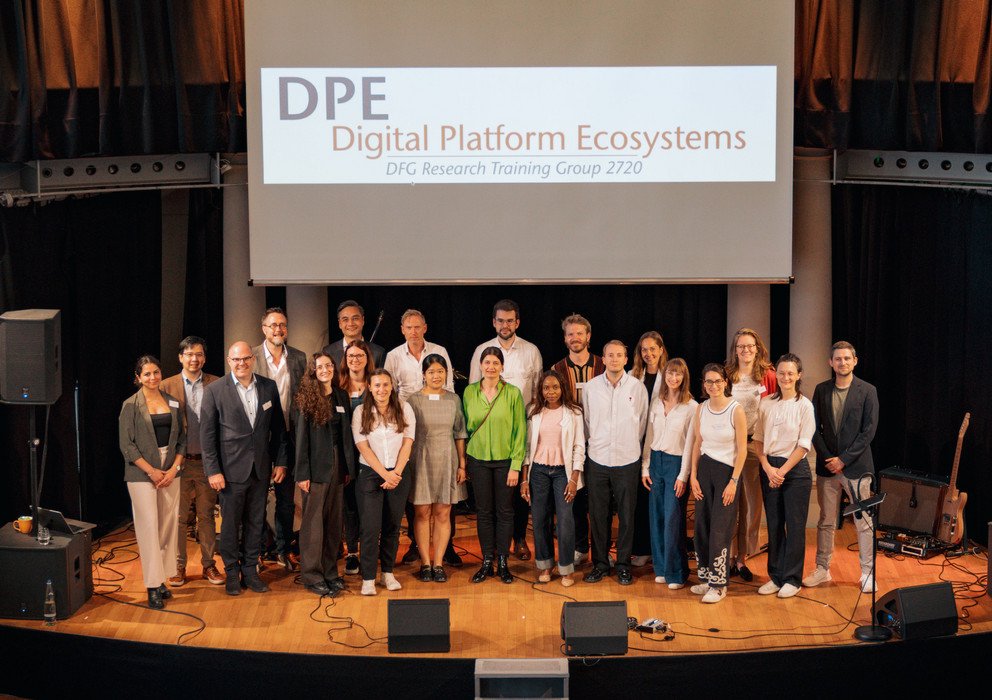
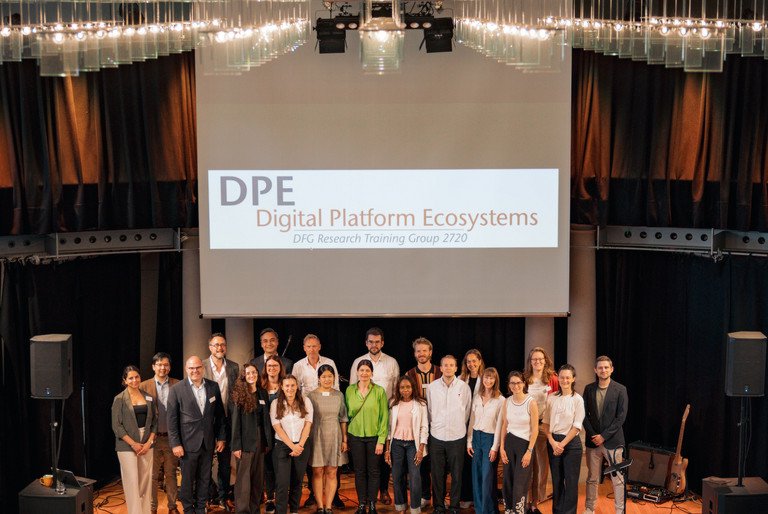
DFG RTGs give doctoral researchers the opportunity to earn their doctorate in a structured research and training program at a particularly high academic level. The RTG DPE stands out for its interdisciplinarity and internationality. Currently, DPE hosts 13 doctoral researchers and two postdocs from six countries. The group unites the core disciplines of the University’s School of Business, Economics, and Information Systems with communication science, which is based at the Faculty of Social and Educational Sciences.
The already completed dissertations reflect the breadth of the group’s research: the questions they study range from how consumers construe who receives their data on platforms, and how Apple’s tracking restrictions affect app developers’ innovativeness, to how the adoption of digital financial services in Niger is incentivized, and how CEO narcissism manifests itself in the development of digital platforms. “Our goal is to train a new generation of researchers who understand platforms holistically—technologically, economically, and societally,” explains information systems scholar Professor Jan Krämer, co-spokesperson and, together with Professor König, initiator of the group. “Ultimately, we aim to contribute to a fairer, more equitable platform economy that serves the common good.”
A global network based in Passau
The group has built a global research network. For instance, it invites leading international researchers to Passau for extended research stays, which the DFG funds through its Mercator-Fellow program. Every two years, the RTG also hosts the “DPE Forum” conference, which brings prominent keynote speakers and numerous scholars from around the world to Passau. “Our doctoral researchers have the unique opportunity to discuss their work directly with the leading minds in their respective field,” says Prof. Dr. König. “DPE opens up perspectives reaching far beyond our students’ own projects.


How do digital platforms influence the global economy and society? In the established research area "Digital Platforms", our researchers analyse digital platform ecosystems with a focus on organisation, value creation, competition, socio-economic well-being, and regulation. More information on the topics and the participating researchers