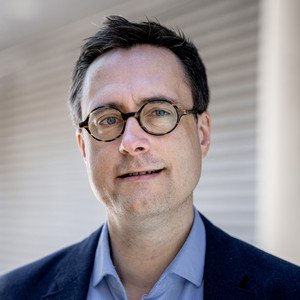
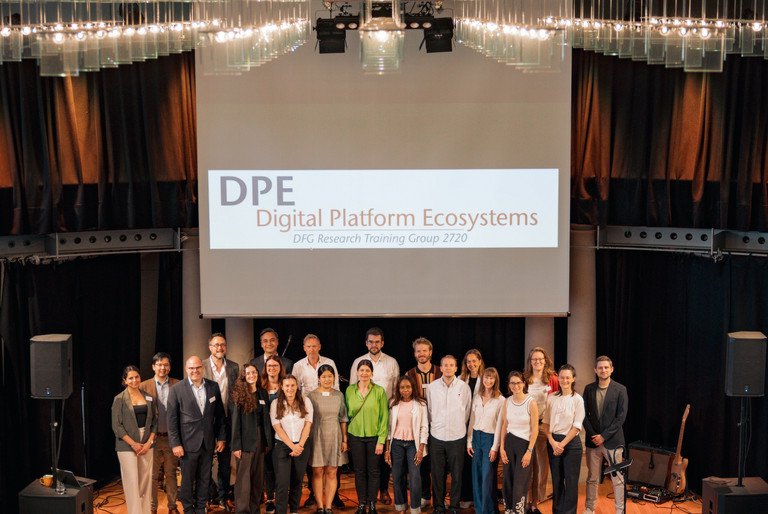
A video from 2022 is playing on the screen. Anastasiya Shylina sees herself and can’t help but laugh. “So young and naive,” she blurts out. Shylina was one of the first doctoral students in the DFG Research Training Group 2720/01 “Digital Platform Ecosystems”. She was part of a diverse and creative group that featured young researchers and their hidden talents in a video series. Shylina’s talent was painting. It still is. But a lot has happened since then.
Over the past three years, she has not only completed her doctoral thesis but also embarked on a new chapter in her career. Her journey shows how interdisciplinary research and global networking open doors – in Passau and beyond.
An unconventional research approach
Shylina’s doctoral thesis is entitled: “From CEOs to Sex Workers: Digital Platforms, Ecosystems, and the Persons Within”. Her work breaks with the tradition of viewing platforms primarily from a technical or economic perspective. In it, she combines management theory with sociological and psychological perspectives. “I focus on the people behind the platforms,” explains the researcher. “How do their characteristics, prejudices and emotions influence the strategies of platform ecosystems?”
In her research, she concludes that even marginalised groups such as sex workers can influence the strategic decisions of platforms – if they make their voices heard. She illustrates this using the example of the social media platform OnlyFans, which provides adult content for a fee and has thereby revolutionised the adult entertainment industry. In 2021, the platform wanted to ban pornographic content. But public pressure from sex workers was so great that the company backtracked. “Platforms are not neutral marketplaces,” says Shylina. “They reflect social hierarchies, but they can also be shaped.”
An international springboard
This approach was made possible by the interdisciplinary methodology of the DFG Research Training Group 2720/01 “Digital Platform Ecosystems” at the University of Passau, the world’s largest research group on digital platforms. Shylina’s supervisor, Professor Andreas König, who is also the group’s spokesperson, encouraged her interdisciplinary perspective – as did the Research Training Group’s international network.
König and his team regularly invite researchers from all over the world to Passau. In 2024, the 'EIASM Workshop on Top Management Teams and Business Strategy Research' brought international scholars to Passau, coinciding with the Research Training Group's 'DPE Forum' conferenc. It was here that Shylina met Timothy Quigley, Professor of Strategic Management at the University of Georgia. He is also affiliated with the Research Training Group as a Mercator Fellow. He spent an extendedresearch stay in Passau.
Meeting Quigley proved to be a career-changing moment for Shylina: she is now researching and teaching at the Terry College of Business at the University of Georgia with the prospect of a junior professorship at one of the world's leading business schools.
So Shylina’s journey is far from over. “Without the Research Training Group, none of this would have been possible,” she says. The combination of academic diversity, global networking and a welcoming atmosphere opened doors she might never have found on her own. What endures are the network and the friendships with the members of the Research Training Group who have accompanied her through the ups and downs of her doctoral journey.
This text was machine-translated from German.

How do digital platforms influence the global economy and society? In the established research area "Digital Platforms", our researchers analyse digital platform ecosystems with a focus on organisation, value creation, competition, socio-economic well-being, and regulation. More information on the topics and the participating researchers