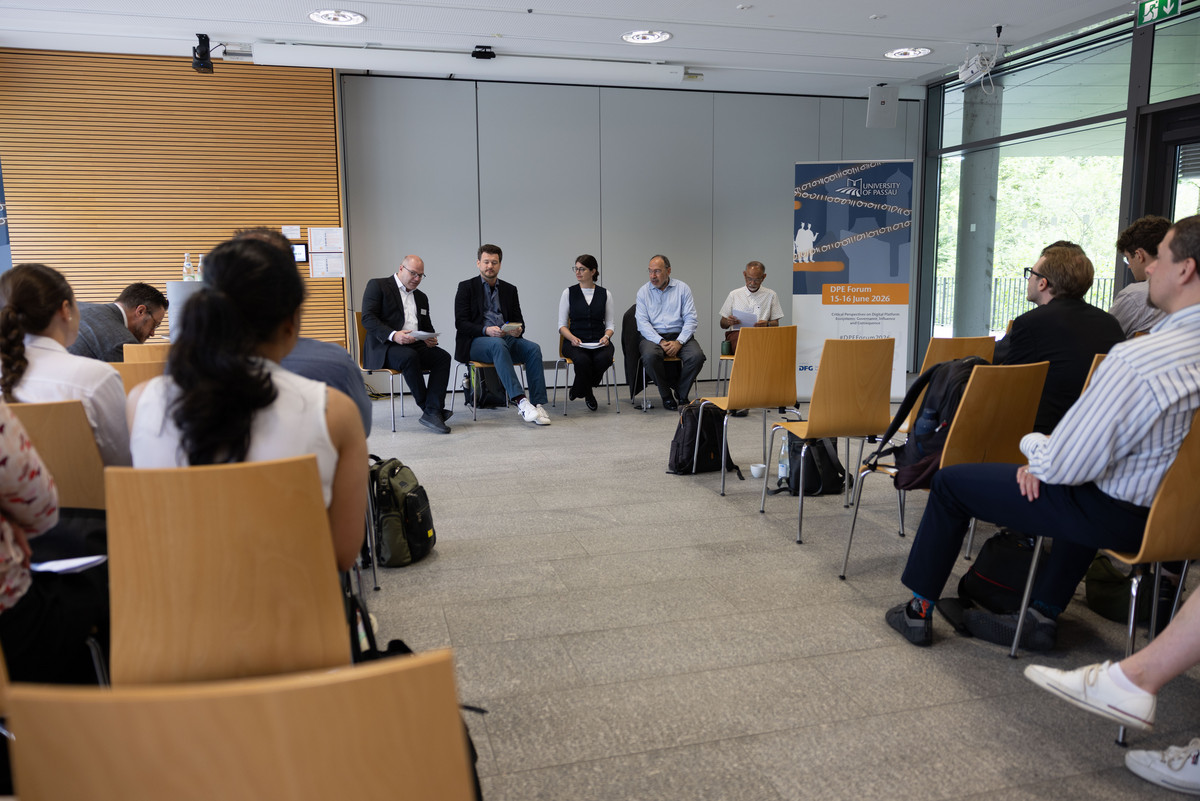
“If you solve a problem for a billion people, you become a billionaire.” A guest at the DPE Forum 2026 throws this quote into the discussion and asks: Does this formula really hold true? In an age when the first tech trillionaire is amassing influence over public opinion and shaping democratic processes?
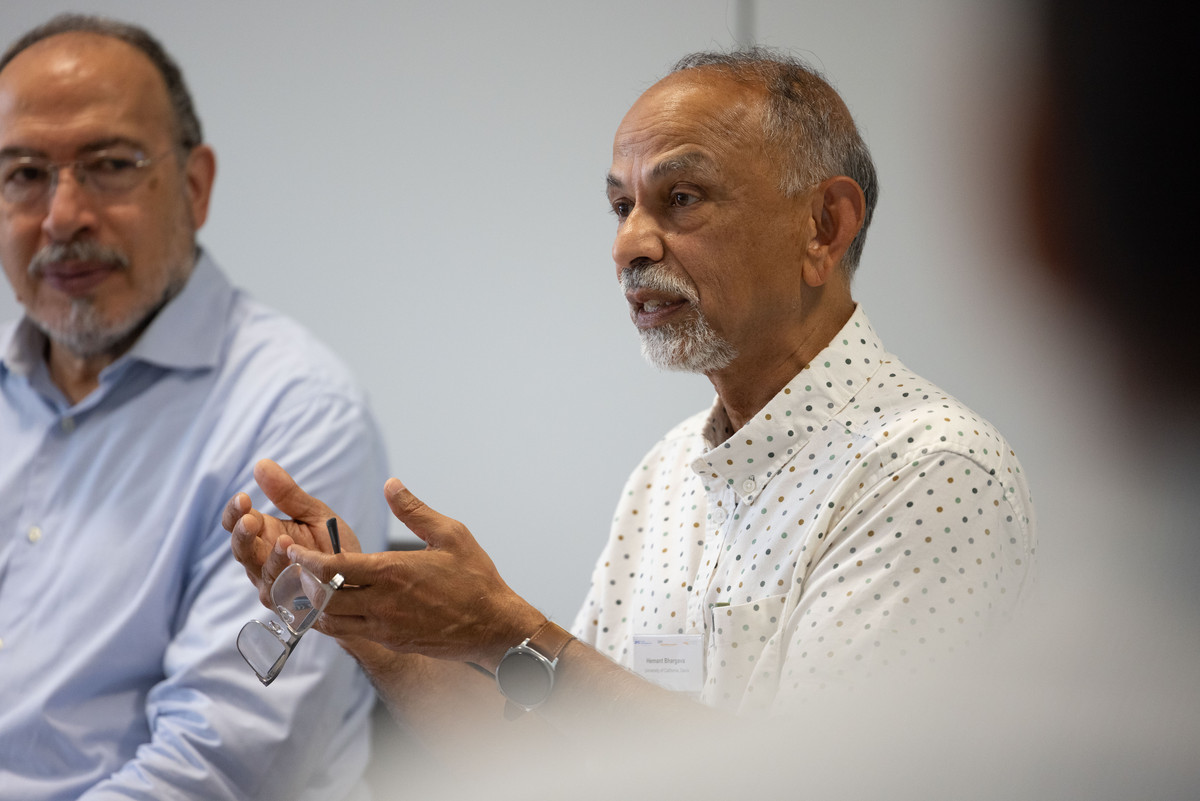
Opinion is divided amongst the panellists at the IT Centre at the University of Passau. Professor Hemant K. Bhargava from the University of California, Davis, recalls the early days of Silicon Valley. Back then, problem-solving really was the focus. Or take Google’s old motto: ‘Don’t be evil’. But if digital platforms accept harm for the sake of profit, says Bhargava, then regulation must step in. Europe is much further ahead in this respect than the US.
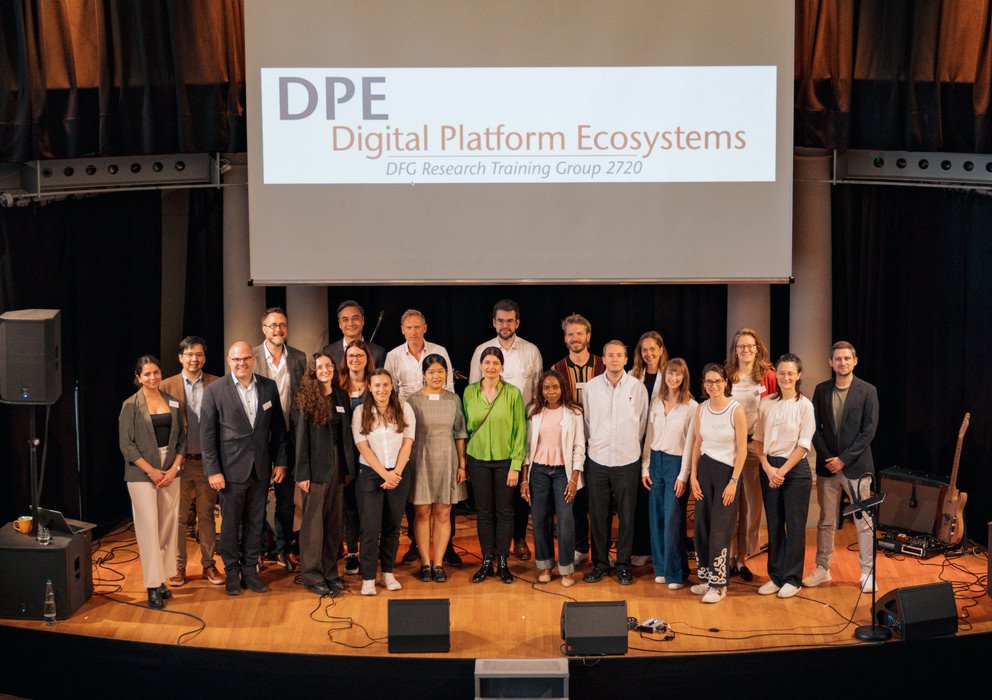
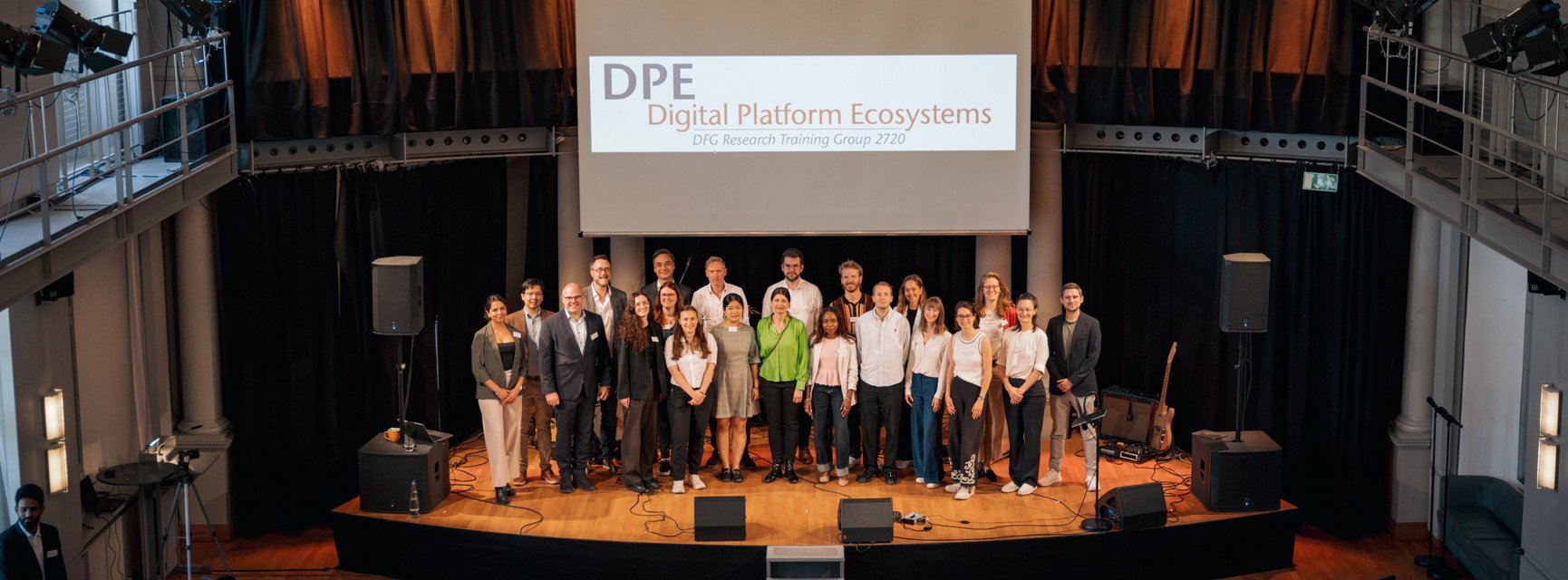
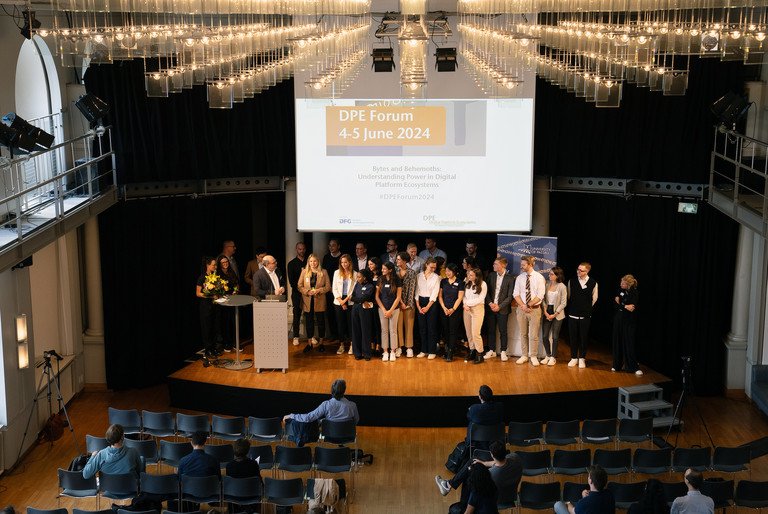
The DPE Forum 2026, which took place on 15 and 16 June at the University of Passau and the Passau Redoute, focused on the development, power and regulation of digital platforms. The conference is the public flagship event of the DFG Research Training Group 2720 “Digital Platform Ecosystems” (DPE). Since 2022, early-career researchers there have been investigating the development of digital platforms from various disciplines. This year’s theme was: “Critical Perspectives on Digital Platform Ecosystems: Governance, Influence and Consequences.”
Aftermovie with insights into the topics of doctoral students:
Over the course of two days, the researchers discussed how platforms are shaping our economy and society – and how they should be regulated. The forum was largely co-organised by the members of the Research Training Group. They were given the opportunity to present their research topics in talks and poster sessions. The aim was to gather feedback and criticism from the community, particularly from experienced researchers.
The topics demonstrated the broad scope of the research: this included a framework for social media platforms that assesses risks to children and young people; a study on the cannabis industry to examine how platforms alter social stigmas; and the impact of negative and positive reviews on the customer base of digital platforms. In the video, doctoral candidates Sonja Herrmann, Verena Kummer and Sarah ben Messaoud reveal more about their research.
Smart control mechanisms and diplomatic tools
The organising team had succeeded in bringing prominent keynote speakers to Passau. At the Passau Redoute, Professor Bhargava took stock of two decades of platform development, highlighting successes, damage caused and unresolved issues of power.
In his keynote address, he also presented a solution: an ‘attention tax’. “Tax attention, collect the revenue and give it back to the users,” he demanded. Away from free services, towards high-quality paid platforms, because: “If platforms have to compete with such paid products, they will automatically moderate themselves.”
Watch the full version of the keynote speech by Professor Hemant K. Bhargava from the University of California, Davis, at the DPE Forum 2026.
Dr Tawfik Jelassi provided insights into negotiations on global regulatory strategies. He is Deputy Director-General for Communication and Information at UNESCO, where he leads programmes on digital transformation, freedom of expression and ethical AI governance. Whilst the EU can impose penalties for breaches, UNESCO’s only recourse is diplomacy. “The aim is to bring all stakeholders to the table,” he said.
When Meta followed Elon Musk’s lead and abandoned fact-checking, Jelassi saw this as a call to action. The spread of disinformation, he argued, is incompatible with UNESCO’s goal of free access to information. He initiated a multi-stakeholder consultation process involving representatives from civil society and tech companies. At the end of the two-year marathon of negotiations, the “UNESCO Guidelines for the Governance of Digital Platforms” were finalised. They were based on more than 10,000 inputs from 130 countries.
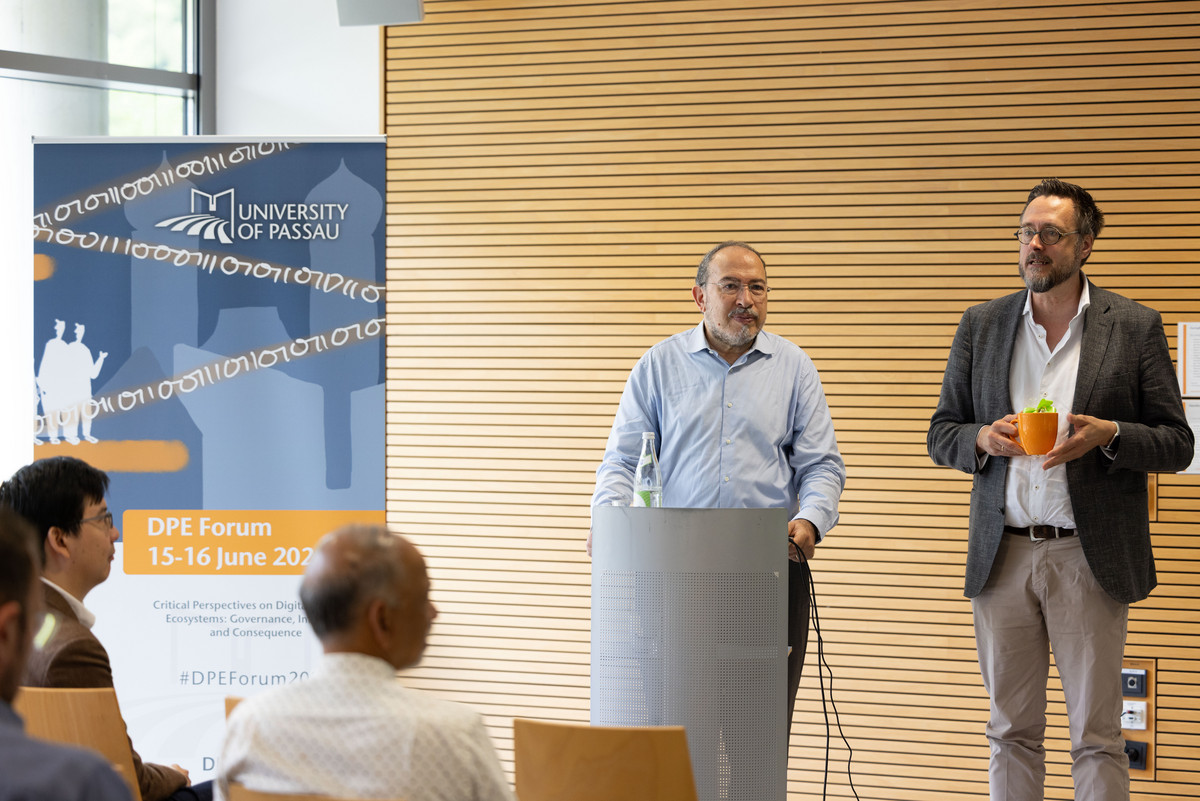
DPE doctoral candidate Sally Boyani Mokaya wanted to know how he managed to bring the parties involved together around the table on such contentious issues. She is conducting research into political discourses in platform regulation. It is easier, says Jelassi, when negotiations take place in person. During coffee breaks, he can discuss with representatives from adamant countries to see how they might overcome their pain points.
His experience from both worlds – academia and politics – is likely to help him in this regard. Throughout his career, Jelassi has repeatedly been appointed to prominent posts, such as Minister in Tunisia’s transitional democratic government. Academia, he said, was the only field he had actively chosen. “Academic freedom is wonderful. You won’t find this kind of freedom anywhere else.”
Interdisciplinary research with a global perspective
Jelassi emphasises that the DPE Forum is important in bringing together global perspectives from both the Global North and South. “It is a great opportunity for me to interact with doctoral researchers and to explore the role of value systems in the global governance and regulation of digital platforms, with the aim of making them a true force for good”, he says.
The DFG Research Training Group 2720 “Digital Platform Ecosystems” (DPE) is funded by the German Research Foundation (DFG). It is the world’s largest research group on the platform economy, particularly within the field of economics, and shapes the University of Passau’s established research area “Digital Platforms”. What sets the group apart: “We examine digital platform ecosystems from a truly interdisciplinary perspective,” says spokesperson Professor Andreas König. Added to this is a global viewpoint: “Our focus is not only on the North, but also on the Global South.”
But what do these perspectives mean for political practice?
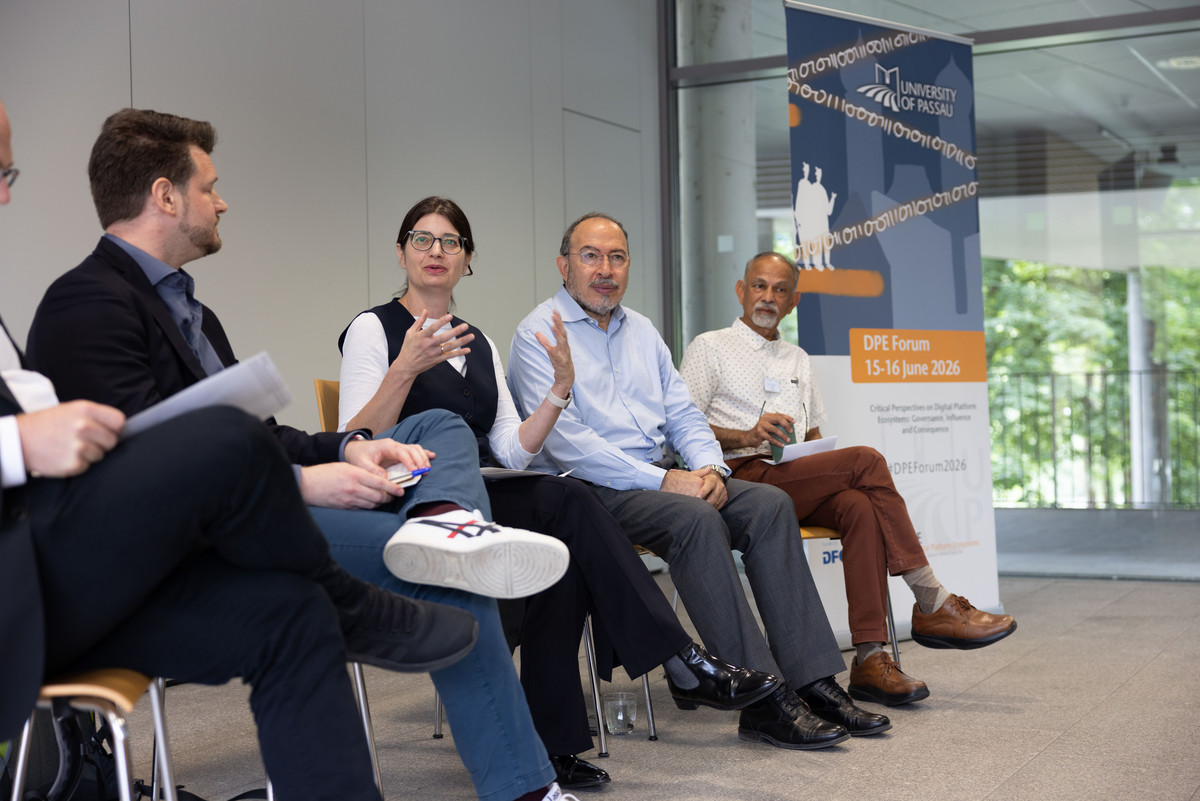
At the panel discussion mentioned earlier, the moderator, Professor Jan Krämer, posed a tricky question to the participants: what policy measure would they implement first if they were a benevolent dictator? Professor Carolin Häussler, an innovation researcher and member of the EFI Commission, quoted Canadian Prime Minister Mark Carney, who said that we are currently ‘on the menu’, rather than at the table. Her wish: that the EU should succeed in establishing a single internal market for start-ups. 450 million people, one market. Then, according to Häussler, the EU would become “another country at the table”.






How do digital platforms influence the global economy and society? In the established research area "Digital Platforms", our researchers analyse digital platform ecosystems with a focus on organisation, value creation, competition, socio-economic well-being, and regulation. More information on the topics and the participating researchers