Research areas at the University of Passau have been further developed into established and emerging ones. The established areas are shaped by large, interdisciplinary consortium projects funded by third parties and coordinated by university members. The video presented during Dies Academicus 2026 provides an insight into some of these projects and the people involved. With show notes.
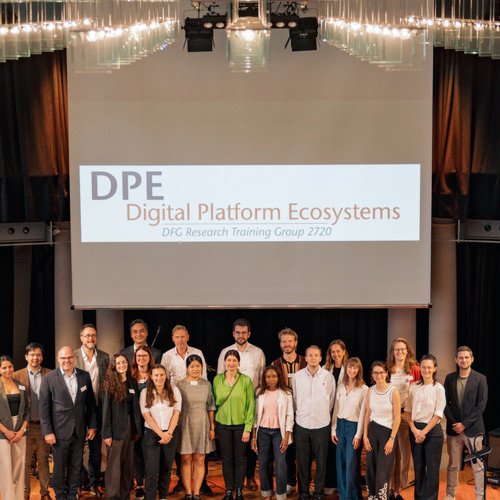
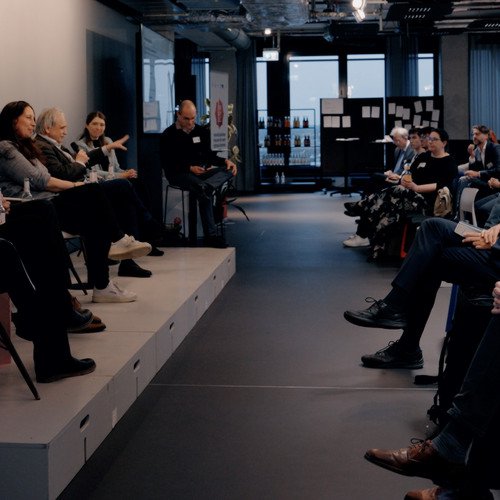
How can digital platforms change healthcare provision and prevention in sub-Saharan Africa? This is the question that doctoral candidate Laura Stock is exploring within the DFG Research Training Group 2720 'Digital Platform Ecosystems' (DPE). Her topic is one of many being investigated at the Passau Research Training Group. The breadth of the spectrum was on display at the 'DPE Forum' conference, which took place at the University of Passau in June this year and brought platform researchers from all over the world to Passau. Guest speaker Professor Hemant Bhargava of the University of California, Davis, acknowledged what sets the Forum apart: it addresses problems that are "incredibly important for the economy and society". And being located in Germany makes it particularly valuable, because academic research here is closely connected to policy-makers, whether at national or EU level – "there is nothing like that in many other countries".
After four years of work, the Bavarian Research Association ForDaySec has reached a central finding: cybersecurity must not only address the technology, but also people's needs. The team therefore combined ethnographic, legal and technical research – "to make everyday life safer", as the association's spokesperson Professor Stefan Katzenbeisser puts it. The legal situation is also demanding, explains the legal scholar Professor Thomas Riehm: even at the market launch of a device, the requirements are barely foreseeable – and that is to say nothing of the threat environment, which changes later.
What helps counter conspiracy mindsets? What competencies do citizens need in a democracy? In the Horizon Europe project TaCT-FoRSED, an international consortium led by the University of Passau is investigating exactly these questions. Dr Hannes Birnkammerer and his team, for instance, are developing games for classroom use that are intended to build democratic resilience. In the Democracy Education Lab, innovative formats for civic education are emerging – primarily for future teachers, but also for public discourse, as Managing Director Dr Linda von Keyserlingk-Rehbein explains.
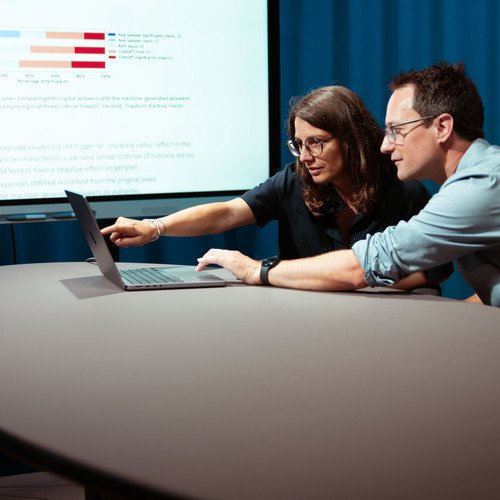
Artificial intelligence is ubiquitous in our communication – including in political communication. A team led by Professor Annette Hautli-Janisz and Professor Steffen Herbold asked themselves: who is more persuasive in political debates – the human or the machine? The researchers fed questions from a British political talk show into a language model that answered in the style of the respective guests. The result surprised even the researchers themselves.
The computational linguist Professor Johann-Mattis List, however, also reminds us that, for all the artificial intelligence, the human being remains the "master of language". More than 7,000 languages are spoken worldwide – AI only commands roughly one per cent of them. And even how this diversity came about is something that little is known about so far, a question being explored by a team led by Professor List.