Aerial view of Tuvalu (Funafuti) showing one of the narrowest parts of the island, where you can see both the sea and the lagoon. Photo: Adobe Stock
How habitable is our future? The lecture series “Habitability in Times of Global Crisis” in the winter semester 2025/2026 at the University of Passau provides exemplary insights into habilitation research at universities worldwide. The aim is to present interdisciplinary approaches by researchers. One focus is on social science, humanities, and economics perspectives, which complement and expand on the natural science perspective. The lectures take place every second Wednesday from 6 to 8 p.m. (c.t.) in the Philosophicum building, lecture hall 3. Patrick Sakdapolrak, Professor of Population Geography at the University of Vienna, gave the opening lecture. To the lecture series program
In the middle of the Pacific Ocean, several thousand kilometres from the nearest mainland, more than 11,000 people live on a small group of islands. This is the island nation of Tuvalu. The inhabitants' homeland is increasingly threatened by rising sea levels.
Their homeland could become uninhabitable.
The Tuvaluans are among the first in the world to be offered a kind of climate asylum by Australia due to these pressing climatic conditions. This example of the already urgent effects of man-made climate change will be the subject of lively discussion on Wednesday evening at the start of the Sustainability lecture series. This semester, the lecture series entitled ‘Habitability in Times of Global Crises’ takes an interdisciplinary look at (un)habitability.

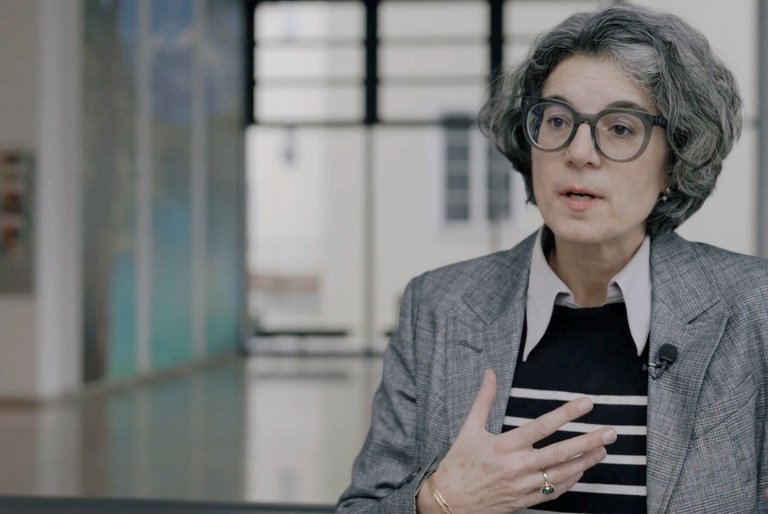
The discussion is led by Patrick Sakdapolrak, Professor of Population Geography and Demography at the University of Vienna. His work examines the links between population dynamics, environmental change and development, focusing on migration, displacement and the response of vulnerable groups to risks. He is co-founder of the Environmental and Climate Mobilities Network and the Climate Mobilities Knowledge Hub. The professor is also helping to shape the concept of habitability himself. Publications with other renowned definers focus primarily on the Global South.
Cases equivalent to the prominent example of Tuvalu are on the rise. In addition to sea levels, droughts, storms and heavy rainfall events are also increasing – but this is not the only reason why we decide where we humans – but also animals and plants – move our habitats and, above all, where we stay.
What does habitability mean and who defines it? “We need to also think about who defines habitability and inhabitability and what are the consequences of it,” says Sakdapolrak. He makes it clear that environmental changes are not only natural, but above all socially and politically negotiated questions of where to live and where we belong.
He shows what this means in concrete terms by using examples from individual real-life situations:An old person, a young person. An elderly woman, a young man. An elderly woman in Iraq, a young man in Germany. An older woman living in a small village in Iraq, a young man living in Berlin, Germany. This can become very detailed. So many elements of the socio-cultural structure, such as skin colour, disposable income and other resources in our diverse societies, have an impact on our reality of life and our ability to make certain decisions, in addition to climatic environmental conditions.
How the concept of habitability is changing
The historical background, as explained by Sakdapolrak: Early thinkers classified parts of the world as habitable or uninhabitable mainly on the basis of climate and geography. But as our understanding has evolved, so too has the concept of habitability. Social, cultural, political and economic factors are now increasingly coming into focus.
According to the scientist it is important to note that quality of life varies greatly even within the same place. Different people perceive and experience a place differently depending on their social status, economic means and cultural ties. What may be a harsh environment for one group may be home for another. Places are also globally connected – Sakdapolrak cites Dubai as an example. It flourishes in a desert due to global flows of resources, labour and knowledge, demonstrating how connections between places influence quality of life.
Sakdapolrak discusses the complexity of migration and displacement in the context of changing environmental conditions. He emphasises that migration is not an inevitable or simple response to ecological challenges. People's decisions are influenced by many factors, and many choose to stay despite the difficulties. Policy must respect these realities and support communities' right to remain and adapt, rather than forcing them to migrate.
Recognising the complexity of habitability
He also cautions against labelling certain places ‘uninhabitable’ without including the voices of the people who live there. Such narratives risk perpetuating colonial attitudes and ignoring local knowledge. To understand habitability, we must instead listen to the communities affected and consider ethical and power-political dimensions alongside scientific data.
Sakdapolrak's lecture is a call to recognise the full complexity of habitability. It is an evolving relationship between people and places, shaped by the environment, society and global connections. For researchers, policymakers and anyone concerned with the impacts of climate change, this means moving beyond simple models and pursuing nuanced, inclusive approaches that recognise the diversity of human experiences in a changing world.
His perspective not only deepens scientific understanding but also promotes more equitable and effective responses to one of the most pressing challenges of our time.
Text: Mona Hinrichs

The lectures will take place every second Wednesday in Innstr. 25 (PHIL) Lecture Hall 3. More information and details on the programme