The symbolic photo shows a document from 1786, the oldest in the University of Passau’s archives.
Writing is one of the most important inventions in human history. It transformed how we share knowledge, communicate, and pass information from one generation to the next. But has it also changed the way we build sentences and the complexity of our languages?
Researchers from the Universities of Passau and Zurich set out to investigate the effect of this technology on language. Their findings challenge a long-standing assumption: writing does not appear to make language’s structures more complex, both in how we use it and how it has evolved over time. Perhaps the impact of current technological revolutions on language through social media and AI might be less severe than feared by many.
Writing and complexity

“Because writers can plan, revise, and edit their sentences, it has been assumed that they might use more complicated sentences,” explains Carlo Y. Meloni from the University of Passau and lead author of the new study, which was published in the prestigious journal “Proceedings of the National Academy of Sciences” (PNAS). “However, the previous studies that have supported this idea only focused on a handful of languages, mostly from Europe.”
To challenge this widespread belief, the researchers conducted an analysis of around 100,000 spoken and written sentences from 30 different languages. They compared the number of clauses, i.e., the building blocks of a sentence, and how deeply nested they were; in other words, how complex. Then, the researchers also analysed grammar rules from 59 languages to test whether grammar became more complex as writing was introduced in history.
The results show no universal trend. “The written sentences were not consistently more complex than the spoken ones,” Meloni states, “and the languages did not systematically develop more grammatical structures after adopting writing.”
Effect of technologies on language
With their results, the researchers contradict common perceptions about language, literacy, and human progress. “Many people wrongly assume that languages become more complex when they acquire writing,” Meloni says. To explain the development of complexity in languages, he rather points to social factors: the way people construct sentences may depend more on cultural preferences and ideas about how language should be used than on writing itself.
A parallel can be drawn with the current concerns about social media and artificial intelligence, as many worry these technologies will change human languages. “It is tempting to assume this, but as the study shows, technological innovations, no matter how revolutionary they are, do not necessarily change the basic structures of language or how complex the sentences that we use are,” adds Professor Balthasar Bickel, another senior author of the study and director of the NCCR Evolving Language, funded by the Swiss National Science Foundation, an interdisciplinary consortium in Switzerland researching language evolution; the study was carried out within the context of this network.
Writing has fundamentally transformed how humans communicate, but it has not necessarily changed how we build complex sentences. As new technologies continue to emerge, the study suggests that the future of language may depend less on the tools themselves than on how societies choose to use them.
About the authors
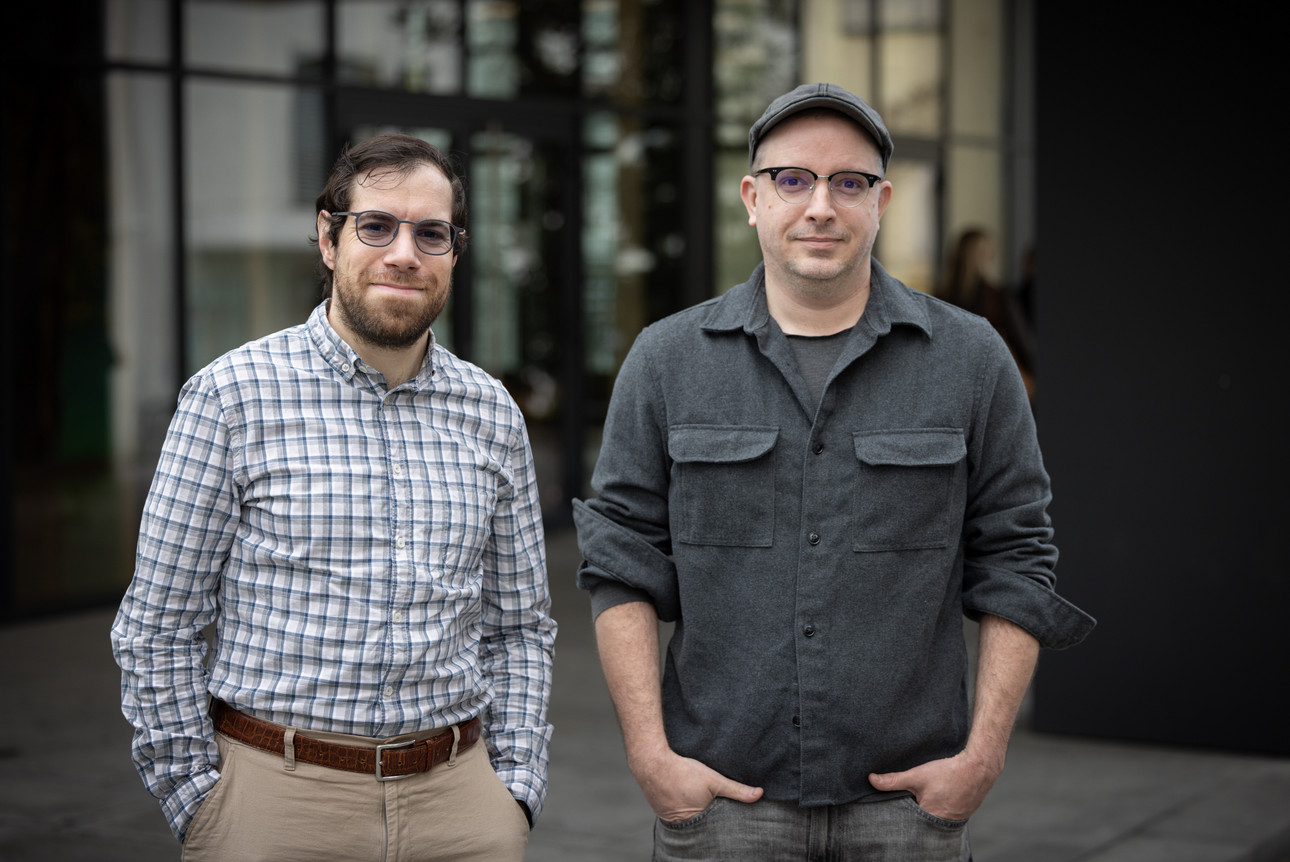
Dr Carlo Yehuda Meloni has been researching and teaching at the University of Passau since 2025 in the team of Professor Johann-Mattis List, who holds the Chair of Multilingual Computational Linguistics. The study was conducted during his doctorate at the University of Zurich as part of the NCCR Evolving Language, a Swiss research network that brings together researchers from various Swiss universities. Dr Kellen Parker van Dam was also involved, likewise a research assistant at the Chair of Multilingual Computational Linguistics. At the University of Passau, the researchers are part of the group "Produsemy", funded by the European Research Council, which investigates the evolution of word families using computational methods. With this focus, they contribute to the University's established research area "AI & Language".
Jessica K. Ivani is Assistant Professor at the University of California, Santa Barbara (UCSB), where Dr Taras Zakharko also researches and teaches. Dr Guanghao You is a data scientist at the University of Zurich. PD Dr Chundra A. Cathcart and Professor Balthasar Bickel research and teach at the Institute for the Interdisciplinary Study of Language Evolution at the University of Zurich.
The text was first published on the NCCR Evolving Language website.