"Artificial intelligence has long ceased to be merely a technical tool — it makes decisions with us, writes with us, designs with us, acts for us. What drives me is the question of what this does to people with whom they work together: How do their professional identity, their creativity, and their human experience change? How do they bring in their own ideas and find meaning? And what happens in this process within teams and organizations?
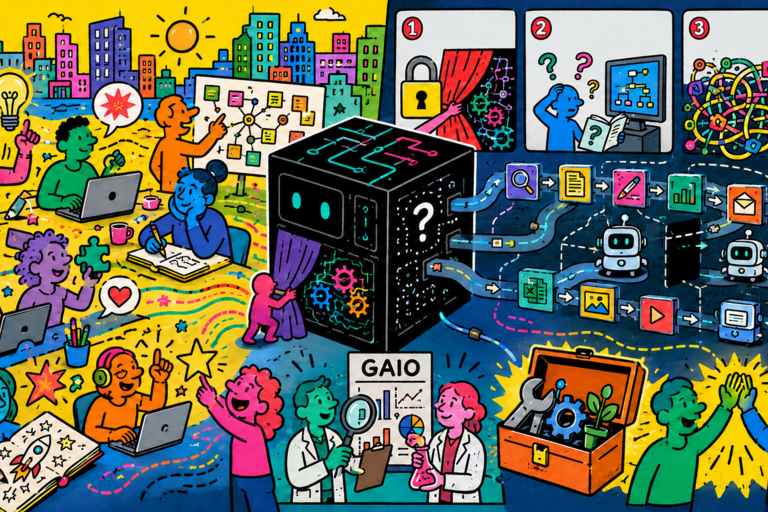
These questions are rooted in my dual background in business administration and positive psychology — a combination that connects economic logic with human experience. Specifically, I investigate various manifestations of AI: discriminative systems that, for example, evaluate creditworthiness; generative AI that itself writes texts, generates images, and formulates arguments; and increasingly also AI agents whose opacity and autonomous actions challenge the generative drive of humans. All of this generates tensions. Between humans and machines, in teams, and in relation to one's own expertise regarding algorithmic recommendation and action. For me, AI is both a research subject and a research tool: We use it for our data analysis to understand where its strengths and limitations for science lie.
I am particularly inspired by projects that put this change into practice – such as our IT training programme in Rwanda that trains young people to become intermediate-level programmers and enables them to work on an equal footing on international projects.
I benefit enormously from the interdisciplinary exchange in Passau — with computer science, psychology, law, and ethics."
Professor Fiedler's team conducts research in the fields of management, people, and information. Particular focus areas lie in organizational behavior, the development of organizational structures and capabilities, as well as information and communication technologies. More about the research at the Chair of Business Administration with Focus on Management, People and Information.
Examples of studies: