Over 30 project partners from the automotive and energy industries, IT and charging infrastructure as well as science have implemented over 12,000 charging processes in several independent field tests over a period of three and a half years and carried out scientific analyses in the context of networked e-mobility. The University of Passau was also involved. The findings have now been presented.
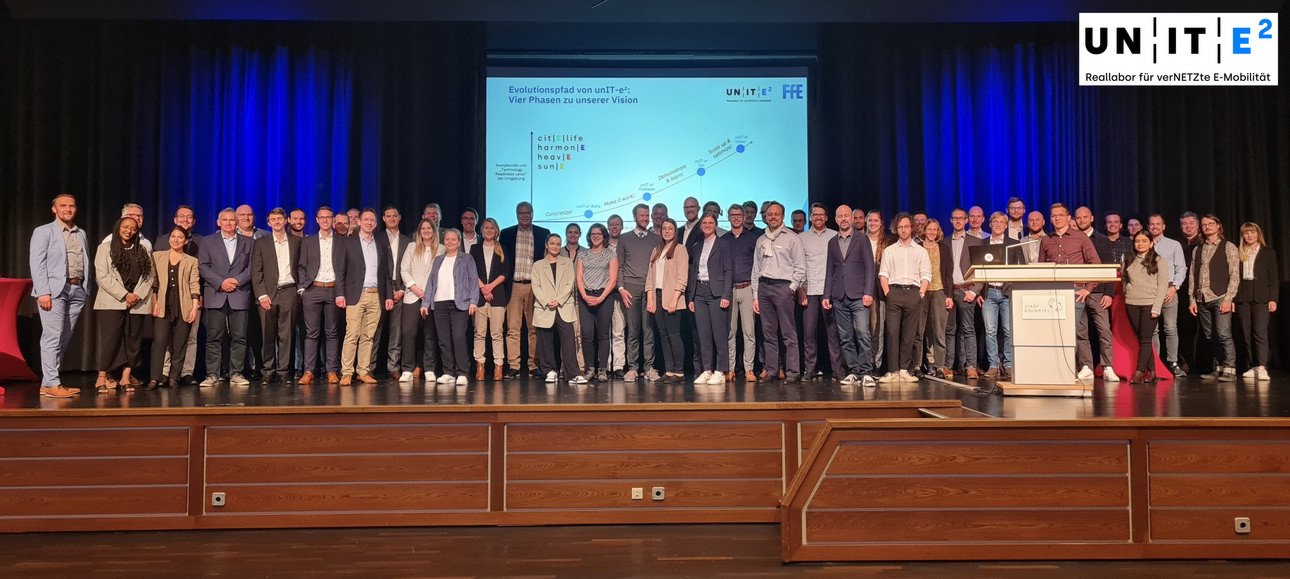
On 31 January 2025, the unIT-e² project, led by the Forschungsstelle für Energiewirtschaft e. V. (FfE), came to an end. As part of a synthesis of the results, the consortium used the knowledge gained to develop a series of specific proposals and recommendations for policymakers, regulators, standardisation bodies and the industries involved. These have now been published in a report. The conclusion: there is potential for reducing costs and emissions for charging electric vehicles without any noticeable restrictions for end customers. In addition, interested parties and users of electric mobility require easily accessible, comprehensive and manufacturer-independent information. Overall, the consortium concludes that a fundamental revision of the grid fee system and the associated European legal framework is needed for the successful integration of electric vehicles into the power grid.
The Chair of Marketing and Innovation, headed by Prof. Dr. Jan Hendrik Schumann, and the Centouris Institute, headed by Stefan Mang, were involved in two sub-projects, the Harmon-E and sun-E clusters, on behalf of the University of Passau. The two teams conducted various studies in the field tests and outside of the field tests in the form of online surveys, interviews and panel surveys in order to accompany the tests from the perspective of user research. A customer journey was also developed and the results were scientifically exchanged with other institutions.
The key findings:
‘Our results show that the integration of e-mobility into other systems of users can be interesting, and the same applies to intelligent charging scenarios. At the same time, however, a great deal of educational work is still needed. Users need to be informed in an intuitive way,’ says Professor Jan Hendrik Schumann. ’I am pleased that we were able to contribute to practical further development in this area with our project results.’
This text was machine-translated from German.
About the project
The research project unIT-e² was managed by the Forschungsstelle für Energiewirtschaft e. V. FfE. Leading companies in the automotive industry such as BMW Group, Mercedes-Benz, Ford and Volkswagen as well as grid operators such as Bayernwerk Netz, EWE NETZ and TenneT participated in the project. In addition, there are further partners from industry such as Schneider Electric, PPC as well as research partners from various institutes and universities, including the University of Passau. The Federal Ministry for Economic Affairs and Climate Protection (BMWi) funded the project with over 30 million euros.
More information: