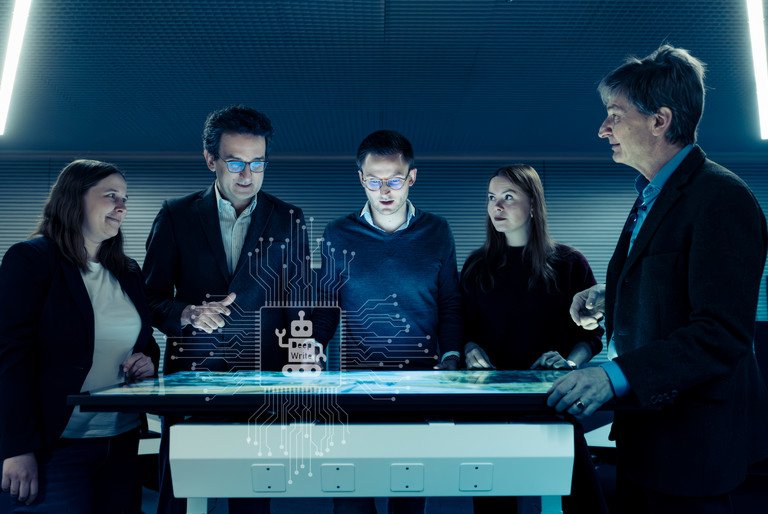
Symbolic picture: Adobe Stock
Search engines determine what information we find – and what we don't. Those who control the infrastructure of web search influence public debates, democratic processes and economic developments. Currently, this power lies with a few US companies.
The EU project OpenWebSearch.EU, coordinated by the University of Passau, has set itself the ambitious goal of changing this. A key milestone has now been reached: the European research team has launched the Open Web Index (OWI) – an open, European web index that serves as the basis for alternative search technologies.
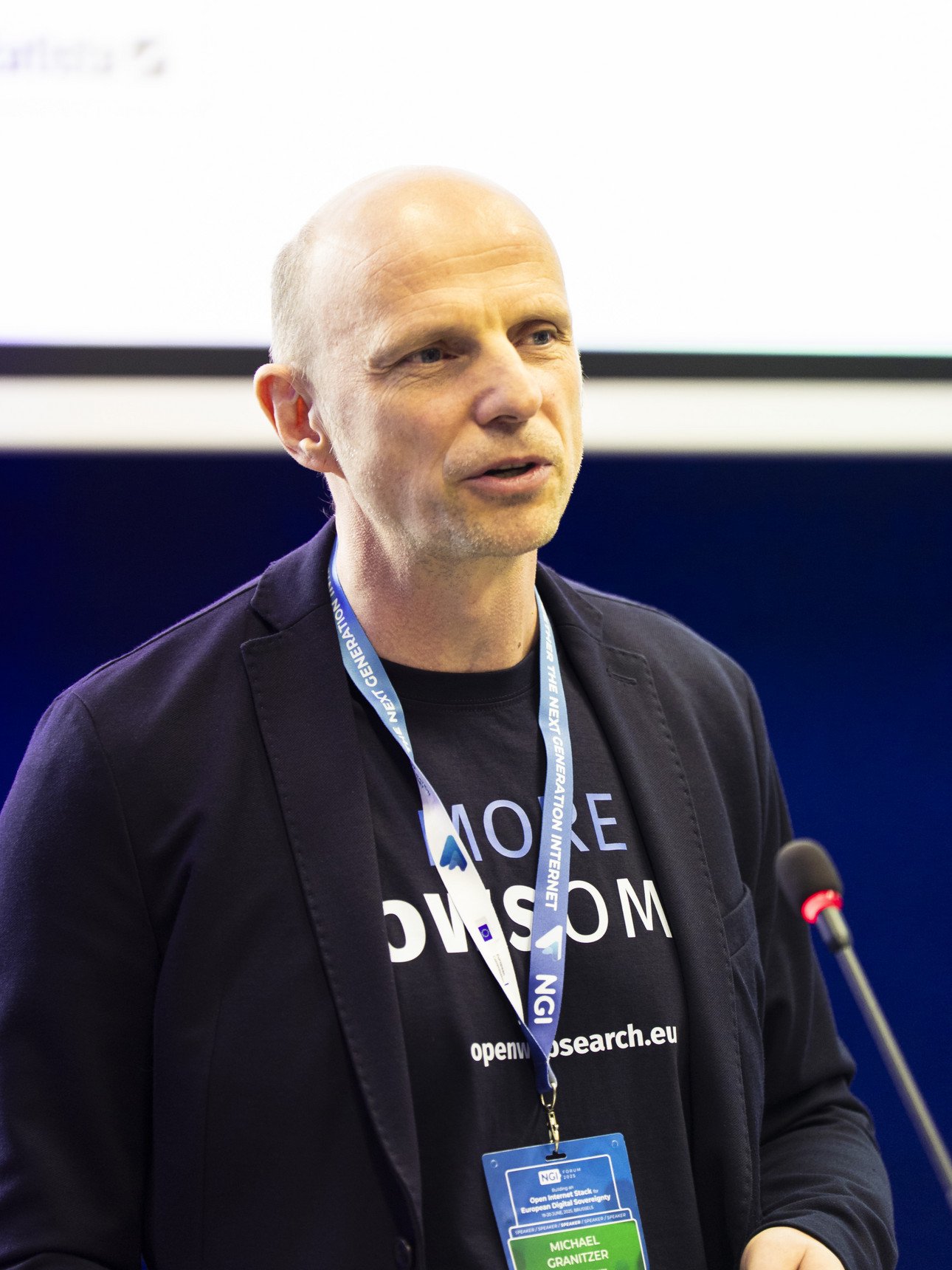
‘The Open Web Index is the first functional prototype of its kind,’ explains Professor Michael Granitzer, Chair of Data Science at the University of Passau and project coordinator. ‘The OWI gives companies and researchers easy access to processed web data.’
Search technologies remain crucial even in the age of artificial intelligence, emphasises the data scientist. ‘Online search is a core component of modern AI. Large Language Models also use search engines via so-called search agents.’ This means that the OWI could also become the foundation for European AI applications and support the development of a European ChatGPT.
What is the Open Web Index?
Essentially, it is a constantly growing directory of website content that is neutral and open source. The OWI already contains several hundred million websites, which researchers in the team of Professor Dr. Granitzer automatically search and index. The focus is on content that is relevant for research, education and public authorities, including primarily pages from the European region and multilingual content.
Unlike search engines such as Google or Bing, which guard their indexes as trade secrets and focus on personalised advertising, the OWI pursues a public interest-oriented approach. It makes a clear distinction between the database that forms the index and the applications based on it. This is intended to give rise to a wide range of services – from specialised search engines and Large Language Models to analysis systems – without any individual having control over the entire infrastructure.
‘Access to information is not a business model, but a cornerstone of democracy,’ emphasises Professor Granitzer. ‘We must ensure that the digital space is as open and pluralistic as our societies.’ The scientist's call for action met with broad support at the Next Generation Internet Forum 2025, which took place in Brussels in June. There, he presented the OWI to representatives from research, politics and civil society.
Index in the test phase
The OWI is currently in a test phase and is being continuously expanded and updated. Access is via an open interface (API) that is available to research centres, non-profit organisations, developers and start-ups. Interested parties can register via the OpenWebSearch.EU platform to gain access to the data. ‘We are currently collecting feedback and identifying technical challenges in order to lay the foundation for stable, scalable operation,’ explains Professor Granitzer.
About OpenWebSearch.EU
The project started in September 2022 and will run until February 2026. It is funded by the European Commission as part of the Horizon Europe research and innovation programme under funding assistance agreement 101070014. It brings together a consortium of 14 European research organisations and data centres. It is coordinated by the University of Passau and the non-profit Open Search Foundation e. V.
The EU is providing €8.5 million in funding for the project. Compared to the billions that US corporations invest annually in the further development of their technologies, this sum seems small. However, the case of Google in particular shows how powerful university research can be: Google Search is based on technology that the Google founders developed while still doctoral candidates at Stanford University.
This text was machine-translated from German.
Funded by the European Union. Views and opinions expressed are however those of the author(s) only and do not necessarily reflect those of the European Union or Horizon Europe. Neither the European Union nor the granting authority can be held responsible for them.




















![[Translate to English:]](/fileadmin/_processed_/0/5/csm_Sprachmodelle_Themenseite_bf99843c7b.png "[Translate to English:]")