How do IT security solutions become suitable for everyday use? Which updates are really necessary? Which data do my smart home devices or my mobile phone store and pass on? On 13 May, Bavaria's Science Minister Markus Blume officially kicked off work in the research cluster "Security in everyday digitalisation" (ForDaySec), which will be researching answers to these urgent questions.
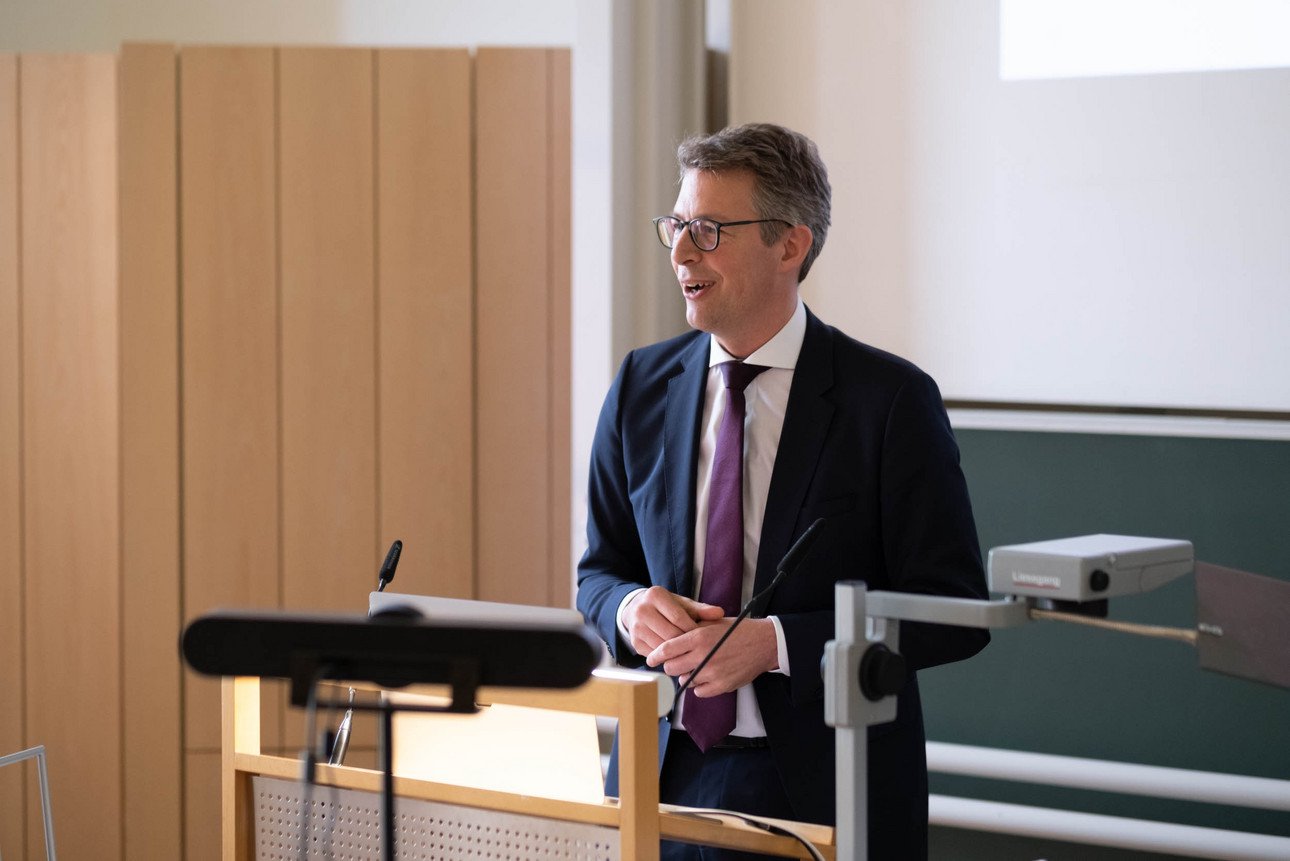
In its first official work session, the research cluster ForDaySec gave Bavarian Science Minister Markus Blume, retired Science Minister Bernd Sibler and other political representatives a preview of the research work it intends to complete over the next four years.
"Cyber security has a key role to play in our liberal society," underscored Blume. "Digitalisation permeates all areas of life. At the same time, the threat of criminal attacks on digital infrastructure has been growing dramatically. So we decided to provide approx. 3.3 million euros in funds to the Bavarian research cluster ‘ForDaySec – Security in everyday digitalisation’. It's a forward-looking investment in Bavaria's ability to perform and compete as a high-tech state."
The unique selling point of the "ForDaySec" cluster is its targeted, interdisciplinary research into new types of technical procedures providing cybersecurity to private households, small- and medium-sized enterprises (SMEs) and the public administration. To achieve this goal, "ForDaySec" will not only be looking into solutions to enhance security for hardware and software but also explore security concepts that can be implemented without any in-depth knowledge and take into account the requirements of technical data protection. Research resources include jurisprudential papers on update obligations and sociological studies on the use of technology in everyday practical applications.
Five universities in Bavaria are involved in the cluster project with eight sub-projects. They bring together computer scientists, sociologists and legal experts who will be conducting research on how cybersecurity can be established as a firm fixture across society. The Bavarian State Ministry of Science and the Arts has awarded the research cluster a 4-year grant worth EUR 3.3 million.
"We see ourselves as an incubator for answers to complex IT security challenges that can be implemented in everyday life. To ensure everyday digitalisation, we want to reduce the obstacles preventing the deployment of IT security techniques. Especially our interdisciplinary approach will allow us to generate new knowledge to resolve socially relevant problem issues," says Stefan Katzenbeisser, spokesperson of the research cluster ForDaySec and professor for computer engineering at the University of Passau.
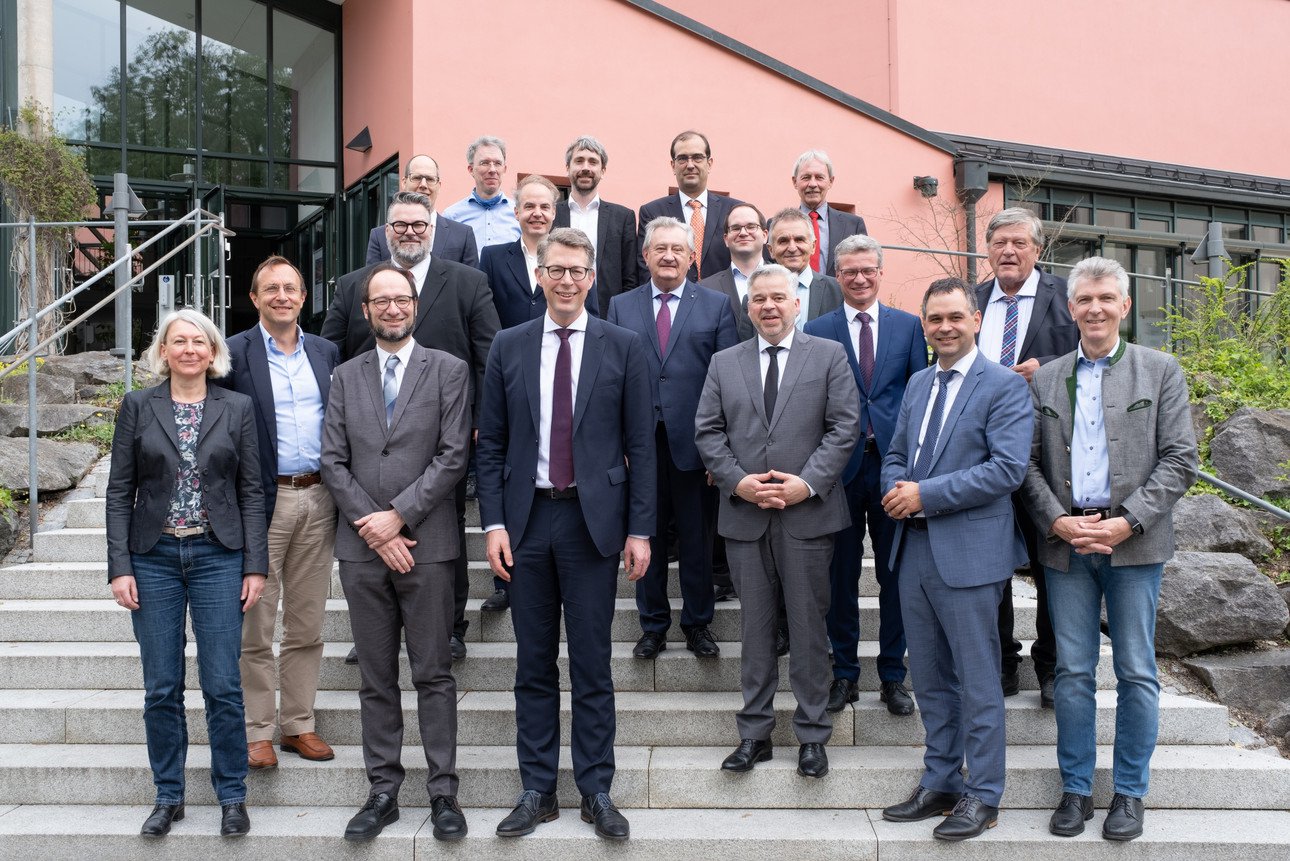
As lead university, the University of Passau is involved in three sub-projects. Professor Stefan Katzenbeisser will be researching ways to encapsulate and monitor vulnerable unalterable end devices. Professor Joachim Posegga and Dr. Henrich C. Pöhls will be exploring methods to securely integrate devices of the Internet of Things into home and business networks. Professor Thomas Riehm will be probing the update obligations and rights of software manufacturers and operators..
Professor Claudia Eckert from Technische Universität München will be exploring ways to integrate unsecure devices of the Internet of Things into secure business infrastructure without incurring any risk.
The Friedrich-Alexander-Universität Erlangen-Nürnberg will be undertaking two sub-projects within the framework of the research cluster. Professor Felix Freiling and Dr. Zinaida Benenson will be analysing technical data protection in app-controlled devices of the Internet of Things. In another sub-project, Professor Sabine Pfeiffer will be having a look at the everyday practices of users, their skills in operating everyday digital devices and the institutional as well as organisational integration of such practices.
In a sub-project at the University of Bamberg, Professor Dominik Herrmann will be looking for ways to strengthen the data protection competency of software developers using software components and training environments while placing a special focus on usability and explainability.
The Universität der Bundeswehr München is an associated partner in the research cluster. Professor Johannes Kinder will be researching ways to harden firmware components without the manufacturer's support. Research cluster ForDaySec - Security in everyday digitalisation
Text: Katrina Jordan
















![[Translate to Englisch:]](/fileadmin/_processed_/9/2/csm_AdobeStock_2043936365_9fc67dfcb5.jpeg "[Translate to Englisch:]")