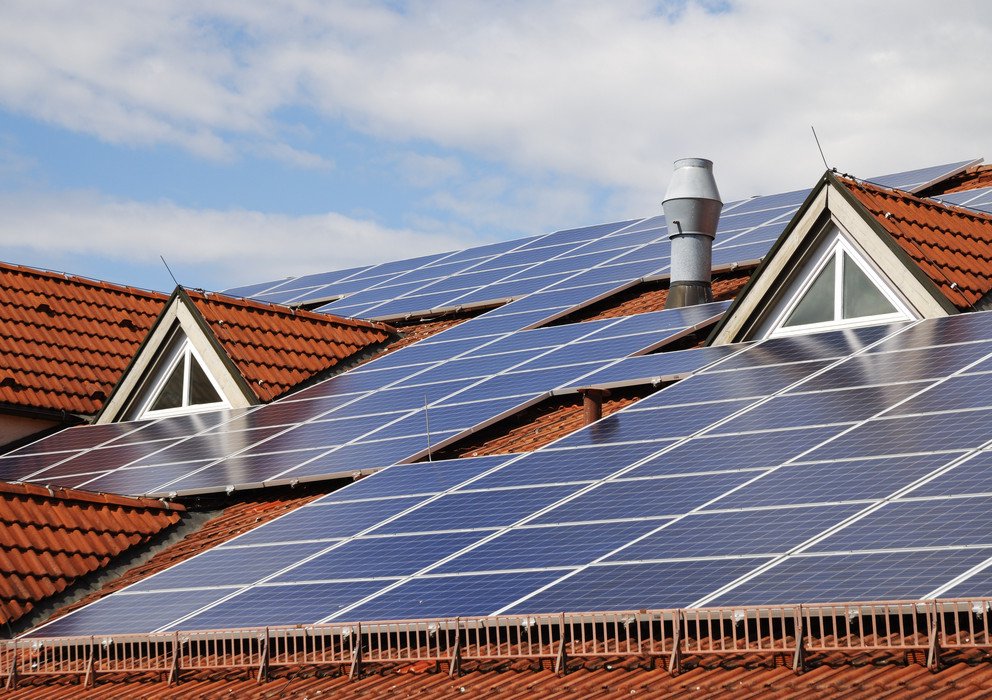
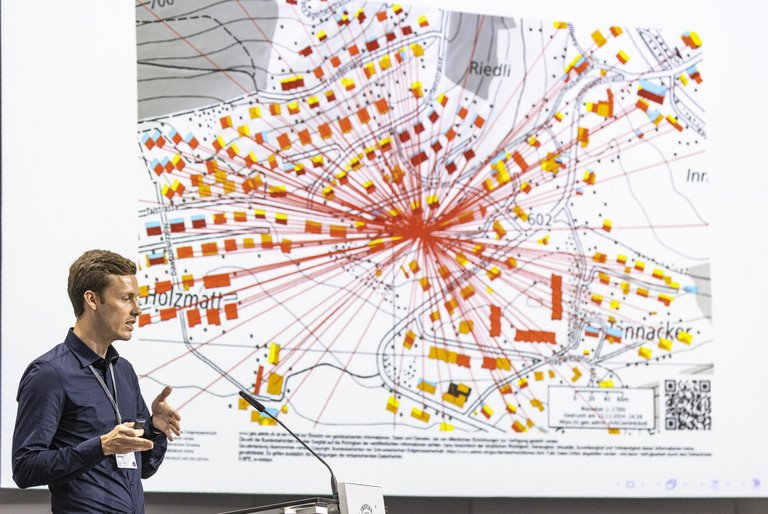
The Swiss Federal Office of Energy has created a valuable trove of data: for millions of rooftops across Switzerland, it has calculated how suitable they are for solar PV installations. Suitability depends on many factors, including the slope and orientation of the roof as well as the building’s location. If a building lies in the shadow of a mountain, for example, it receives less sunlight.
Researchers from the Universities of Passau and Lausanne combined these data with several other extensive datasets. Using this information, they show that solar PV installations in the neighbourhood causally affect the energy-related behaviour of other households – not only their decision to install a solar PV system of their own, but also their electricity consumption and their likelihood of purchasing an electric vehicle. The study, entitled “Green Spills: Peer effects in pro-environmental behaviors”, was recently published in the Journal of Public Economics.
Key findings at a glance:
At first glance, these effects may appear small, but they need to be considered in relation to distance. If the solar PV installation is only ten metres away, the estimated effect is ten times as large as at a distance of 100 metres. The effect declines markedly as distance increases.
“We believe that social norms play a central role. Neighbours observe the installation, interpret it as a contribution to climate protection and feel that they should also do more to help protect the climate,” explains Dr Benedikt Janzen, a researcher at the Chair of Public Economics at the University of Passau.
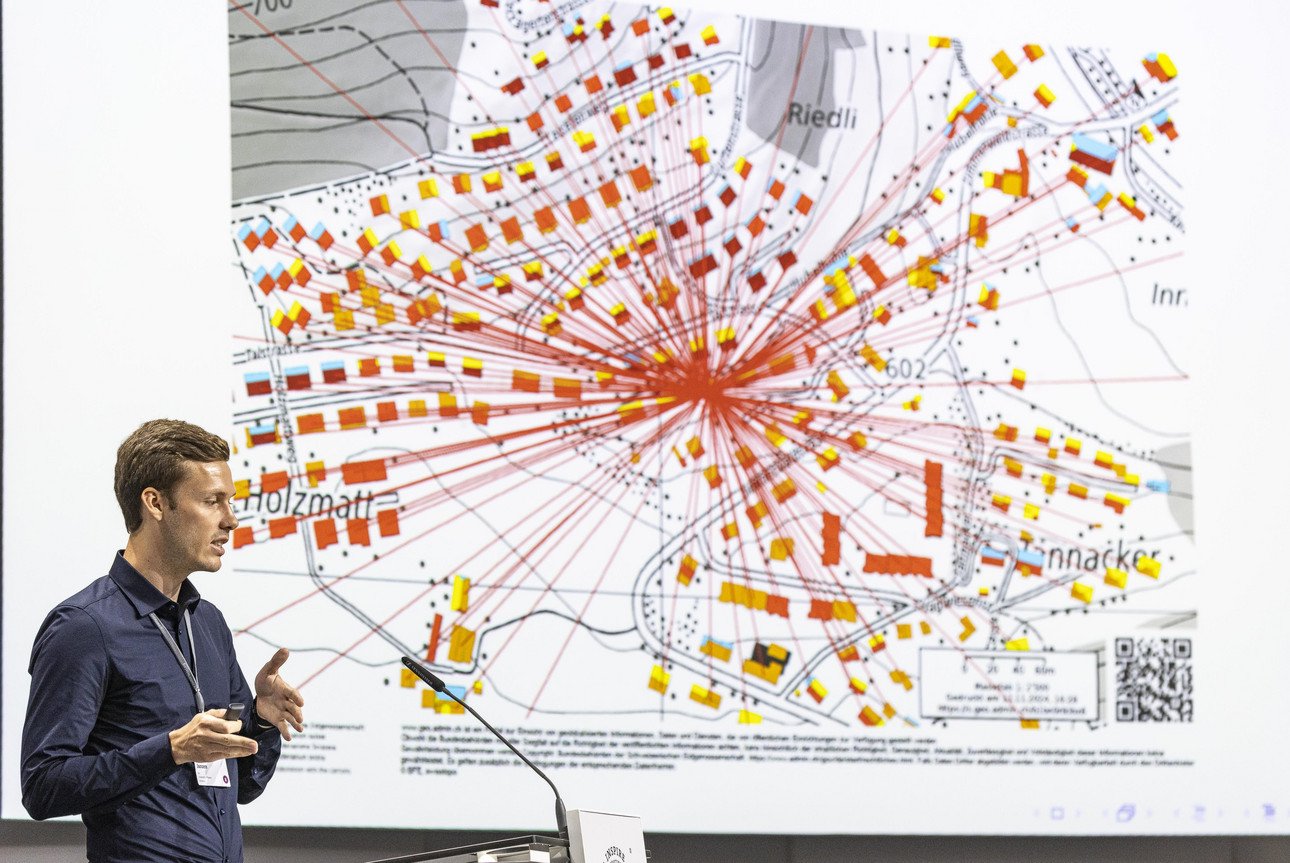
Janzen conducted the study together with his co-author, Dr Patrick Bigler of the University of Lausanne, as part of a research project while he was still a doctoral student at the University of Bern. Since October 2024, he has been conducting research and teaching at the University of Passau. Based on existing research, he had expected solar PV installations to influence the behaviour of neighbouring households. What surprised him, however, was how differently households responded: not all households followed their neighbours by installing solar panels themselves – some reduced their electricity consumption instead.
About the methodology
The study is based on administrative data on solar PV ownership, annual electricity consumption and car ownership for more than 260,000 households in the Canton of Bern between 2008 and 2019. The researchers combined this information with data on the suitability of surrounding rooftops for solar PV systems. To identify causal effects, the researchers took advantage of the fact that rooftops differ in their suitability for solar PV systems across neighbourhoods. This allowed them to investigate how an increase in the number of solar PV installations in a neighbourhood affects the behaviour of other households.
The study provides new insights into the diffusion of green technologies. It also shows that these neighbourhood effects should be considered when evaluating public policies: “The fact that installing a solar PV system generates additional positive effects on energy-related behaviour in the surrounding neighbourhood ultimately improves the cost–benefit balance of solar subsidies,” Janzen explains.
This text was machine-translated from German.